Sales & Revenue
Customer Discovery Template
Add this template to your Jamie account or sign up and try it.
Use template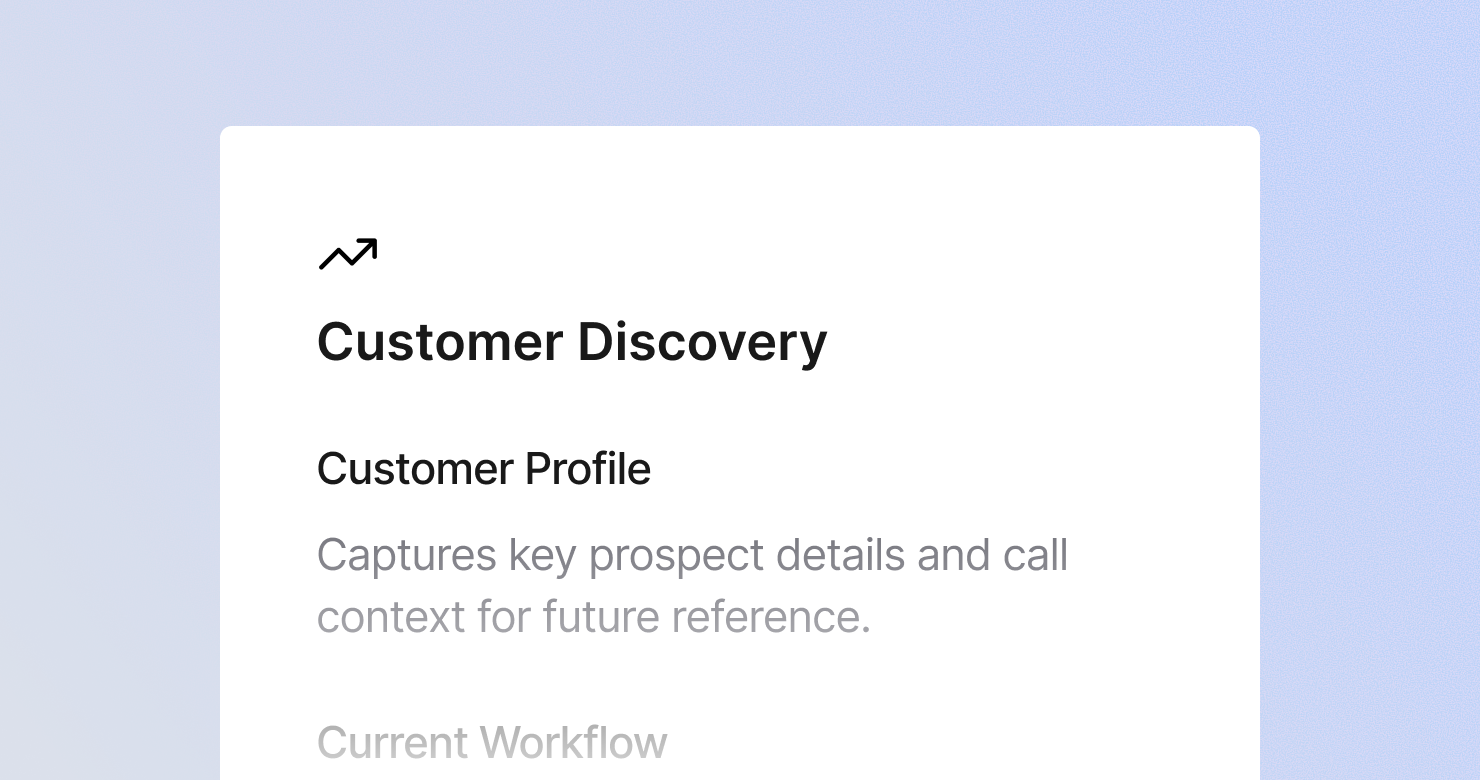
A customer discovery template is a structured format for documenting discovery calls with prospects or customers. It defines what to capture from each conversation: who you spoke with and why they matter, how they handle the problem area today, every pain point and frustration in their own words, what success looks like to them, what alternatives they have considered, and the agreed next steps. The goal is to produce notes that preserve the customer's exact language and perspective - so product, sales, and leadership can build from real signal rather than paraphrased impressions.
About this template
This template has six sections. Each one tells Jamie what to listen for during a customer discovery call and how to structure the output.
Section 1: Customer Profile
Captures who you spoke with: name, role, company, size, and industry. Plus how the call was set up and any relevant context about their team or organization. The foundation for every follow-up and every future reference to this conversation.
Section 2: Current Workflow
Documents how the customer handles the problem area today - the tools, processes, and workarounds they use, who is involved, how often the workflow happens, and what a typical cycle looks like. Captures their exact descriptions rather than paraphrased summaries.
Section 3: Pain Points and Frustrations
Lists every problem, frustration, and unmet need the customer described - in their own language. What is broken, how often it happens, what they have tried before, and what the cost of not solving it looks like. This is the section that feeds directly into positioning and messaging.
Section 4: Desired Outcomes
Captures what success looks like from the customer's perspective: what an ideal solution would do, how they would measure improvement, and any specific capabilities they mentioned unprompted.
Section 5: Alternatives Considered
Documents every other solution the customer has used, evaluated, or mentioned - and what they liked or disliked about each. The competitive intelligence section.
Section 6: Next Steps
Captures all follow-up actions and commitments from both sides, with a clear owner for each.
Why Teams Use This Template
Customer language is the most valuable output of a discovery call and it gets lost fastest
The difference between "customers are frustrated with the process" and "we spend two hours every Monday reconciling three spreadsheets and something always breaks" is the difference between a vague insight and a usable one. A structured template captures the exact language before it gets paraphrased out of existence.
Pattern recognition across multiple calls requires consistent structure
When every discovery call produces notes in the same six-section format, finding patterns across 10 or 20 conversations becomes fast. Which pain point came up in every call? Which alternative do they all mention? That synthesis is only possible when the notes use the same categories every time.
Product and sales work from the same source of truth
When discovery notes are structured and complete, they stop being locked in one person's inbox and start being usable across the team. Product can pull real quotes. Sales can reference specific pain points. Leadership can see the pattern across customers.
Your team spends less time on write-ups and more time on follow-up
A discovery call write-up done manually takes 30 to 60 minutes. With this template, Jamie produces structured notes within minutes of the call ending.
How to Use This Template in Jamie
Jamie works natively on your device. No bot joins your call, no meeting link needed. Use it across every online platform, capture in-person meetings via your laptop or phone, and get structured notes in 100+ languages - and your data stays on EU servers, fully encrypted, GDPR compliant.
Step 1: Add the Customer Discovery template in Jamie under Settings > Templates - or click Use this template to load it automatically.
Step 2: Start your discovery call on any platform: Zoom, Teams, Google Meet, or phone.
Step 3: Within minutes of the call ending, your notes appear structured in six sections.
Step 4: Switch templates after the fact if needed. Jamie regenerates the summary in the new format. Your transcript stays the same.
Built for customer-facing teams
Jamie processes and stores your data only within the EU. All data is encrypted with AES-256 in transit and at rest. No third-party bot sits in your call. Audio is streamed for transcription and never stored. The template works with any meeting platform and handles calls in 100+ languages.
FAQS
A customer discovery template should include six sections: a customer profile capturing who you spoke with and their context, a current workflow section documenting how they handle the problem today, a pain points section capturing their exact language and frustrations, desired outcomes covering what success looks like to them, alternatives they have considered, and agreed next steps with clear owners.
The most effective approach is to use a structured template that defines what to capture before the call starts - so you can focus on listening rather than simultaneously managing note quality. Teams use Jamie to apply a customer discovery template automatically, so structured notes are ready within minutes of the call ending without anyone spending time on the write-up.
Consistent structure is the only way to find patterns at scale. When every discovery call produces notes in the same six-section format - workflow, pain points, desired outcomes, alternatives - you can compare across 10 or 20 conversations without reformatting. Jamie applies the same template to every call automatically.
Customer discovery focuses on understanding the customer's current reality, workflows, and pain points without a sales agenda - the goal is insight, not qualification. Sales discovery is focused on qualifying an opportunity: budget, timeline, decision process, and competitive landscape. Jamie has separate templates for both, optimized for the different information each conversation is trying to capture.
Yes. Jamie works natively on your device with no bot joining the call, so prospects speak freely without knowing the conversation is being captured. This is particularly valuable for discovery calls, where the goal is candid, unfiltered feedback.