Consulting & Client Work
Discovery Session Template
Add this template to your Jamie account or sign up and try it.
Use template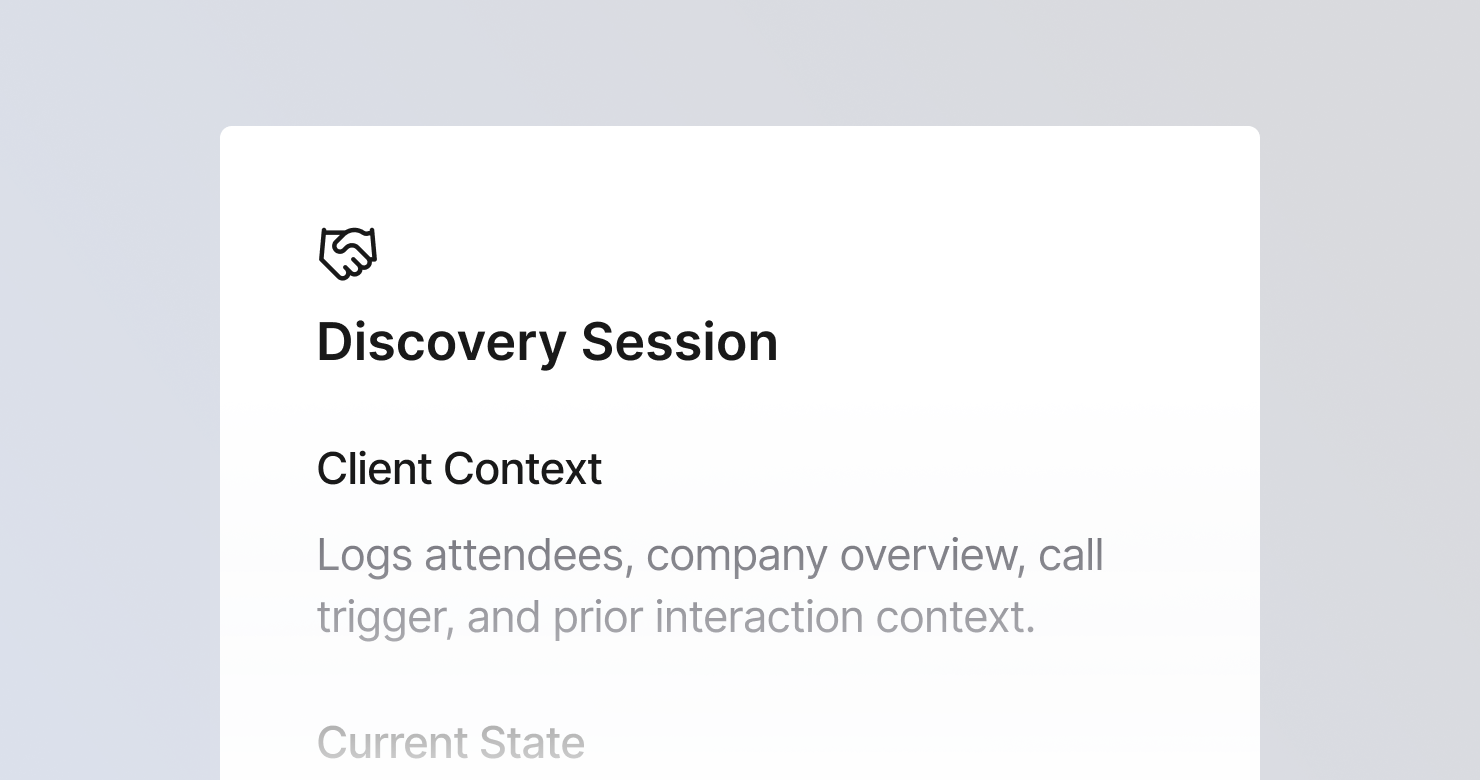
A discovery session template is a structured format for documenting discovery meetings with clients or prospective clients at the start of a consulting engagement. It defines what to capture from each session: who was in the room and the backdrop to the conversation, how things work today in the area being explored, every problem and frustration described in the client's own language, what success looks like to them and how they would measure it, who the key stakeholders and decision-makers are, and what happens next. The goal is to produce notes that capture the client's reality accurately - so the proposal, the scoping, and the engagement are built on what they actually said rather than what the consultant assumed.
About this template
This template has six sections. Each one tells Jamie what to capture during a discovery session and how to structure the output.
Section 1: Client Context
Captures who was in the room, company overview, what prompted this discovery session, and any relevant context from previous interactions.
Section 2: Current State
Documents how things work today - processes, systems, and workflows currently in place, who is involved, what is working well, and what data and tools they have.
Section 3: Pain Points and Challenges
Lists every problem and frustration in the client's own language, with impact, duration, and what they have tried before. Specific descriptions over paraphrased summaries.
Section 4: Desired Outcomes and Success Criteria
Captures what success looks like, how they would measure it, the most important thing to get right, and hard constraints on the solution.
Section 5: Stakeholder Map
Identifies who matters in this decision: the decision-maker, who else needs to be convinced, internal champions or skeptics, and any political dynamics mentioned.
Section 6: Next Steps
Captures agreed actions, what the client needs to do, timeline for next steps, and any materials to share.
Why teams use this template
Discovery is a listening exercise and the notes need to reflect the client's words, not the consultant's interpretation
The most valuable output of a discovery session is the client's exact language about their problems and desired outcomes. A structured template that prioritizes capturing their words over paraphrasing them produces notes that feed directly into proposals and deliverables without distortion.
Stakeholder maps built during discovery prevent surprises during delivery
The skeptic who was not in the room, the budget holder who has not bought in yet, the competing priority that will slow approvals - these surface in discovery if you ask and listen carefully. A structured stakeholder map section ensures they get captured before they become engagement risks.
Consistent discovery structure makes proposal writing faster
When every discovery session produces notes in the same six-section format, writing the proposal becomes a structured exercise: pull the pain points, the desired outcomes, the success criteria, and the constraints directly into the document. No reconstruction required.
Notes that preserve client language strengthen the proposal
A proposal that uses the client's exact words to describe their problem demonstrates that you listened. Structured discovery notes that capture verbatim descriptions make that possible without the consultant having to rely on memory.
How to Use This Template in Jamie
Jamie works natively on your device. No bot joins your call, no meeting link needed. Use it across every online platform, capture in-person meetings via your laptop or phone, and get structured notes in 100+ languages - and your data stays on EU servers, fully encrypted, GDPR compliant.
Step 1: Add the Discovery Session template in Jamie under Settings > Templates - or click Use this template to load it automatically.
Step 2: Start your session on any platform: Zoom, Teams, Google Meet, or in person.
Step 3: Within minutes of the session ending, your notes appear structured in six sections.
Step 4: Switch templates after the fact if needed. Jamie regenerates the summary in the new format.
Built for consulting and advisory teams
Jamie processes and stores your data only within the EU. All data is encrypted with AES-256 in transit and at rest. No third-party bot sits in your call. No audio retained after transcription. The template works with any meeting platform and handles sessions in 100+ languages.
FAQS
A discovery session template should include six sections: client context with company background and what prompted the session, current state documenting how things work today, pain points in the client's own language with impact and duration, desired outcomes and success criteria, a stakeholder map identifying decision-makers and influencers, and next steps with owners and timelines.
The key is capturing the client's exact words rather than paraphrasing into consultant language - the problem description that comes directly from the client is more useful for proposals and delivery than a cleaned-up version. Consulting teams use Jamie to apply a discovery session template automatically, so structured notes preserving the client's language are ready within minutes of the session ending.
An effective discovery session moves through six areas in order: who the client is and what prompted the conversation, how things work today, what is painful and why, what success looks like, who the key stakeholders are, and what happens next. The Jamie Discovery Session template is structured around exactly this progression.
Stakeholder mapping requires asking specifically about the decision-maker, who else needs to approve, whether there are internal skeptics, and what competing priorities might slow the engagement. A dedicated stakeholder map section ensures these questions get answered and documented during the session rather than discovered later.
Yes. Jamie works natively on your device with no bot joining the call. For discovery sessions with clients or prospective clients, where candid sharing of problems and constraints is the goal, no visible recording tool is present.